The Voice as a Healing Instrument
26 September 2026 · 5 min read
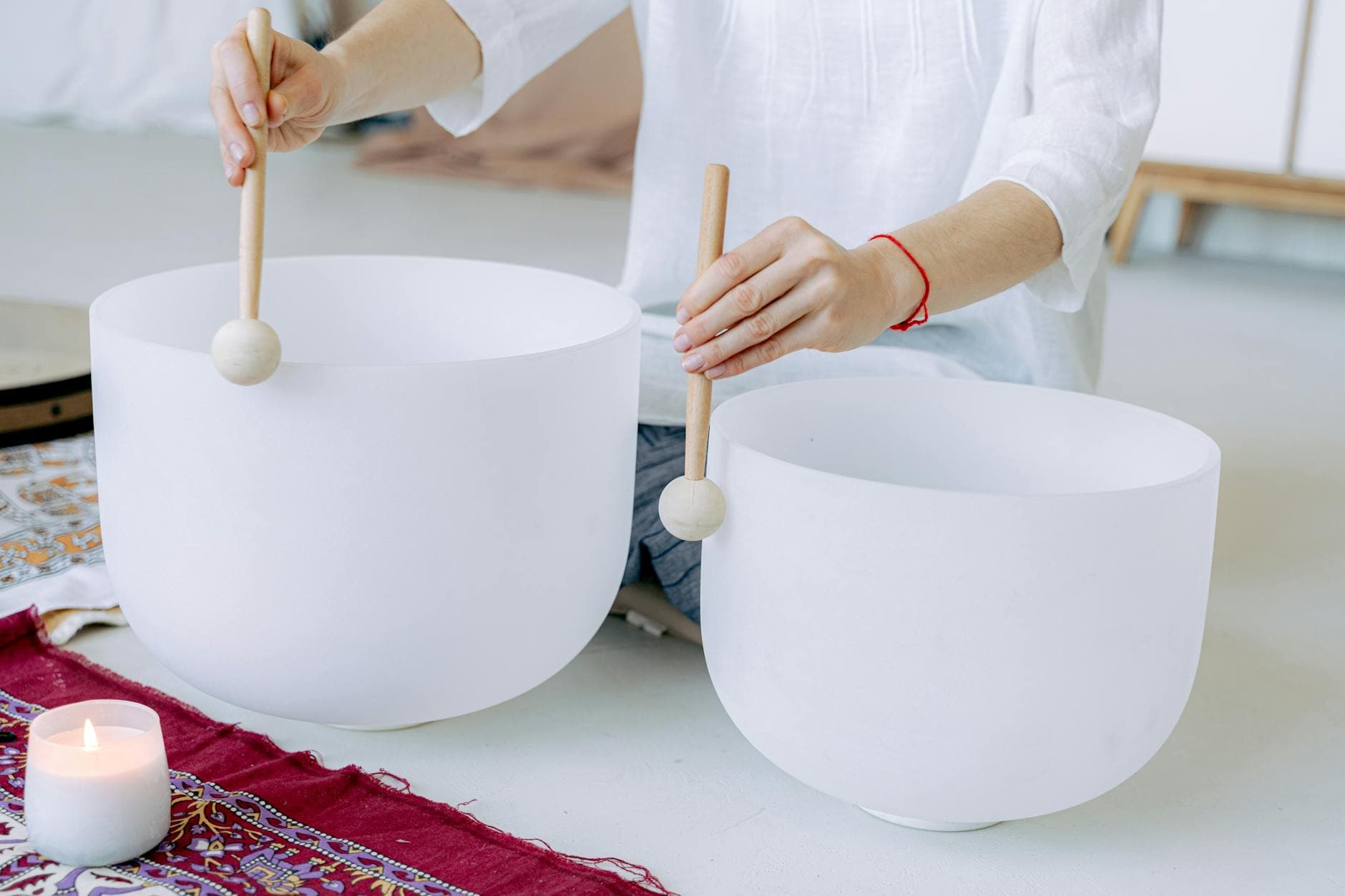
Sound healing is usually pictured as something done to you — bowls, gong, a practitioner moving instruments around a treatment table. Less often discussed is the instrument everyone already carries: the voice. Simple vocal sound, made with your own breath and body, works on much the same principle as any other resonant instrument, and it's available anywhere, at any time, with no equipment at all.
Toning is the simplest version: sustaining a single, comfortable vowel sound for a stretch of breath, with attention on the vibration itself rather than the pitch or how it sounds. Humming does something similar with the mouth closed, which many people find easier to start with because it feels less exposed. Neither requires any singing ability — the goal isn't a pleasant sound to listen to, it's the felt vibration.
That vibration is the actual point. Sustained vocal tone creates a physical resonance in the chest, throat and skull that people often describe as settling, similar to what's reported after a sound bath, but generated from the inside rather than received from an instrument. It's a reasonable explanation for why humming or toning can feel calming even when done alone, quietly, for a minute or two.
Most people's hesitation isn't about the practice itself, it's self-consciousness — a worry about sounding 'wrong' or being overheard. It's worth saying plainly: there's no wrong tone here, and a private minute with the door closed is a perfectly legitimate way to start. Nobody needs to hear it for it to work.
As with the rest of the practices on this site, using your voice this way isn't medical or psychological treatment and doesn't promise any specific outcome — it's a complementary practice, not a substitute for professional support. If you'd like a guided way to try it, the free Your Voice as a Healing Tool guide is the easiest starting point, with Sound Healing with the Voice as a next step.